
Sonora Criminal History Checks
Sonora is Tuolumne County's seat and its only incorporated city. That makes its record path distinct. City police create reports and arrest entries. A person placed in custody is taken into the county jail system. The district attorney decides whether charges should be filed, and the Tuolumne County Superior Court creates the criminal case file. California DOJ receives fingerprint and disposition data for its restricted summary history system.
- Check Sonora Police Citizen RIMS for a city arrest.
- Ask Sonora Police or the city for the underlying public report.
- Check county custody tools if the person was booked.
- Search the Superior Court docket or calendar after charges are filed.
- Use California DOJ Live Scan only for an authorized check or your own record review.
No one stop answers every question. The arrest portal shows police activity, the jail shows custody, and the court shows what prosecutors filed and how the case ended.
Sonora PD Citizen RIMS Arrests
The Sonora Police Citizen RIMS arrests page gives the public a direct city-level view of people arrested by Sonora officers. It is separate from the sheriff's Citizen RIMS system. Check both when the arresting agency is not clear, because city police and sheriff deputies serve different areas but may both bring people to the same county jail.
Citizen RIMS is an arrest channel, not a court judgment. An entry can appear before a prosecutor files charges. It may show arrest and booking details, but it cannot prove guilt. Match dates, agency, charges at arrest, and custody information before following the matter to court.
Records at Sonora Police Department
Sonora Police Department is at 100 S. Green Street, Sonora, CA 95370. Its main phone is (209) 532-8141, and fax is (209) 532-4845. The official city profile describes a small local agency with a chief, lieutenant, two sergeants, twelve sworn officers, and a part-time school resource officer. Records work is substantial: the department lists one Records Supervisor, five full-time Dispatch-Records Specialists, and two part-time specialists.
The city police department profile shows that structure.
The dedicated records staff makes city police the right first contact for a report created by a Sonora officer.
Sonora Police Department
100 S. Green Street
Sonora, CA 95370
(209) 532-8141
Sonora Public Records Request Route
When the police forms page does not offer the exact record needed, use the city's public request channel. The Sonora public records request page is tied to City of Sonora, 94 Washington Street, Sonora, CA 95370, phone (209) 532-4541. Describe the record, date, location, responding agency, and report number if known. Those details help staff locate the correct city file.
This city route is not a court search and does not request a sheriff report.
Sonora Police also publishes a records, policies, and forms page with items such as a Citizen Complaint Form and Supplemental Loss Report. Ask city staff which form fits the record. A request can be narrowed or redacted when it touches an active investigation, victim privacy, a juvenile, or other protected facts.
Booking and Arrest Records in Sonora
Official sources do not show a separate Sonora city jail. When a Sonora arrest requires custody, police route the person to Dambacher Detention Center, also known as Tuolumne County Jail, at 12915 Justice Center Drive. The booking file then belongs to the county custody system, even though Sonora Police made the arrest.
Trace the event in order. Start with the city Citizen RIMS arrest entry. Next check the sheriff's In Custody Search or Citizen RIMS for booking status. After filing, use the Superior Court criminal lookup or court calendar. The arresting agency answers who made the arrest. The booking agency answers where the person was held. The court answers which charges were filed and what happened next.
Sonora Daytime Record Demand
The city is small in land and resident count but carries far more daytime activity. The official Sonora demographics page lists three square miles, a resident population of 4,871, and a daytime population of 22,000 to 25,000 as workers and visitors arrive. Sonora also serves as the county seat, commercial hub, and a tourism center.
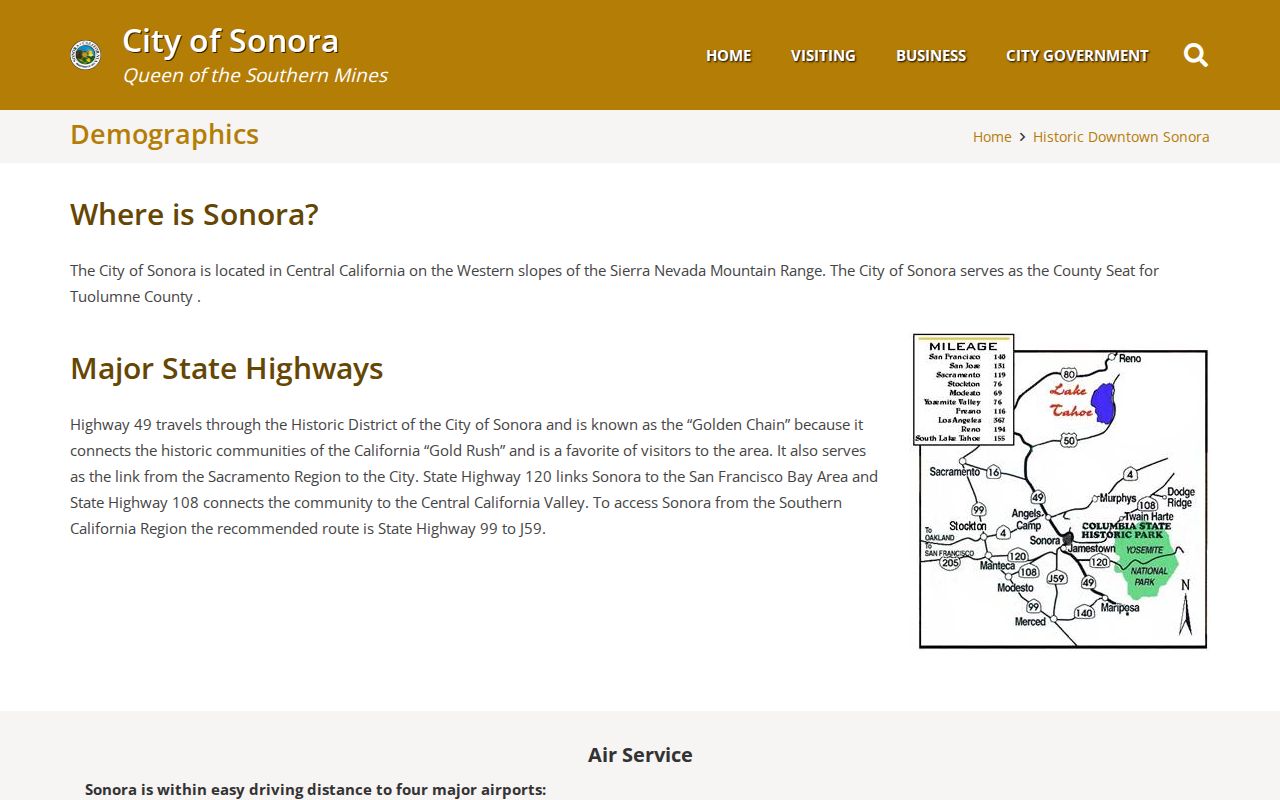
That rise helps explain why city police and court records may involve people who do not live within Sonora.
A narrow city population figure can thus give a false sense of police workload. Records users should match the agency and event location, not assume a person was a city resident because a Sonora officer handled the incident.
The Sonora Municipal Court File
Sonora has no standalone municipal criminal court in the California trial-court structure. Criminal citations and filed cases go to the Superior Court of California, County of Tuolumne, at 12855 Justice Center Drive. The criminal division handles felonies, misdemeanors, infractions, public offenses, DUI, and certain fish, game, and animal control citations.
| Court | Superior Court of California, County of Tuolumne. |
|---|---|
| Address | 12855 Justice Center Drive, Sonora, CA 95370. |
| Case types | Felonies, misdemeanors, infractions, criminal fines, and warrants. |
| Lookup | Case-number search, court calendar, clerk counter, or mail request. |
| File contents | Charges, docket events, minutes, disposition, sentence, fines, warrants, and public probation terms. |
Use the city police channel for the report and the court channel for filed charges. If a case number is unknown, the clerk can search by name in person or by mail; a search longer than ten minutes costs $15 per name.
Sonora Live Scan Tuesdays
Sonora Police Department is the county's DOJ-listed Live Scan location. It accepts appointments on Tuesday from 10:00 a.m. to 3:00 p.m. The rolling fee is $20, separate from any DOJ or FBI fee. Payment may be made by cash, cashier's check, personal or company check, or credit card.
Bring the BCIA 8016 form supplied by the requesting agency, or BCIA 8016RR for a personal California record review. Live Scan captures fingerprints and returns an ATI tracking number. It is not a public search of another person's record. The broader Tuolumne County record overview explains the state self-review route.
How Sonora Records Reach the County
A Sonora police event moves through several custodians. Police make the report and arrest entry. County jail staff create booking and custody fields. The district attorney reviews the matter for filing. The Superior Court records charges, hearings, disposition, and sentence. Fingerprints and final results can then feed the California Department of Justice.
Record flow: Sonora Police Department › Tuolumne County jail and courts › California Department of Justice
Timing matters. A police entry may exist before a court case. A court disposition may post after a jail release. If a DOJ self-review lacks a final disposition, DOJ may contact the arresting agency, district attorney, court, or probation department in a genuine effort to complete it.
Gold Rush Sonora to Digital Records
Sonora grew as a county seat and trade center in the 1800s. Mining waned, lumber added new life, and the Sierra Railroad arrived in 1899. Downtown retains historic buildings, including the opera hall, courthouse, and the Tuolumne County Museum, which began as a jail. The city's short history connects that old civic core to today's Sonora.
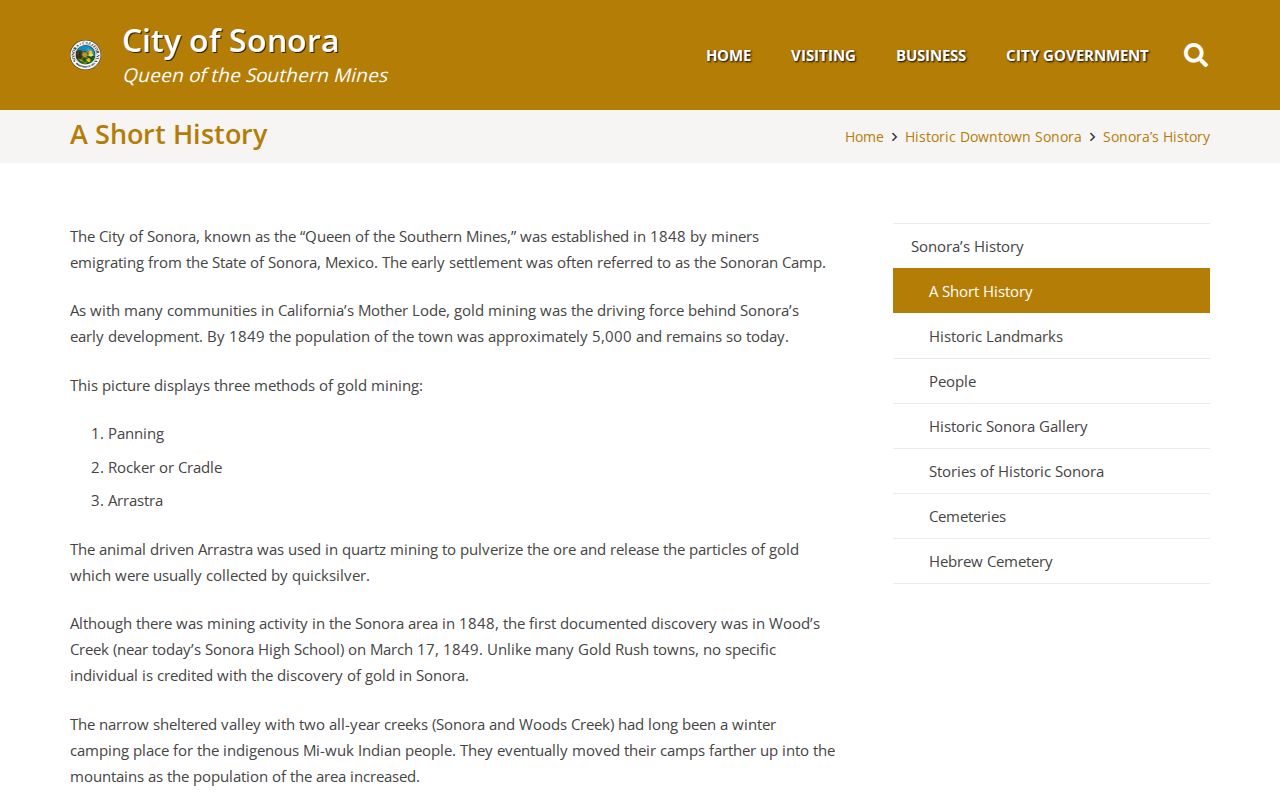
The old jail and courthouse are strong landmarks, but modern criminal court business takes place at the Justice Center.
That distinction prevents a common local error. Historic buildings tell the story of Sonora records, yet current files are requested through city police, City Hall, the county jail, or the Superior Court based on who holds them.
Sonora Record Access Rules
The California Public Records Act applies to city and police records, subject to exemptions and special law-enforcement rules. A request may produce basic incident or arrest information while withholding active investigative detail, victim data, confidential facts, or juvenile material. Court case access follows judicial record rules rather than a city request.
Key statutes:
California Public Records Act requires public records to be disclosed unless a law permits withholding.
Government Code sections 7923.600 through 7923.805 set special rules for law-enforcement records.
Penal Code section 11105 restricts state summary criminal history and does not create a public name search.
Ask the agency that made the record. Sonora Police and City Hall hold city material. The sheriff holds county reports and jail records. Superior Court holds the filed case. Clear routing is the fastest way to avoid a denial based only on sending a sound request to the wrong office.
Sonora Report and Court Copies
Police reports and court copies require different requests. For a city report, start with Sonora Police records or the city request route. Give the report number if known, event date and place, and enough contact data for staff to respond. If a Sonora arrest led to filing, ask Superior Court for the case file. A city request cannot produce the clerk's docket, minute orders, disposition, or sentence.
The court accepts criminal record searches at the Criminal Division window. A mailed request should give the full name, date of birth, and other identifiers. Include a self-addressed stamped envelope. The court tells mail requesters to send a blank check payable to Tuolumne Superior Court with “Not to exceed $25.00” written on it. It aims to process copy requests within ten working days.
Clerk counter hours are Monday through Friday from 8:00 a.m. to 4:30 p.m. Phone help runs from 8:00 a.m. to 3:00 p.m. The online case-number lookup is free but needs that number. When it is missing, a name search at the clerk fills the gap and may cost $15 if it takes more than ten minutes.
Sonora Arrests Before Court Filing
A Sonora Police arrest entry can appear while the case is under review. The district attorney, not the arresting officer or jail, decides which charges to file. Until that decision creates a court case, a case-number search cannot work. Check the city arrest portal and county custody record first, then return to the court calendar or docket after filing.
This delay explains why arrest charges and filed charges can differ. Booking fields record the basis for custody at that time. A complaint or information records the prosecutor's filed allegations. The disposition tells how those claims ended. Keep all three stages separate, and never treat a Sonora arrest as proof of a conviction.
Sonora Records When Data Differs
Conflicts between systems often reflect timing or purpose. Sonora Police may list an arrest date, county jail may show release status, and Superior Court may use a later filing date. Compare agency, case number, report number, birth date, and event date rather than relying on one name match. Ask the record custodian to correct its own field.
For a state summary error on your own record, use California DOJ's record review and discrepancy process. The state may need a genuine effort involving Sonora Police, the sheriff, district attorney, court, or probation. That fingerprint route is restricted self-review. It is different from a public city search.
Sonora Record Search Notes
Before contacting an office, write down the full name, date of birth if known, event date, location, agency, report number, booking number, and court case number. Not every field will exist. The identifiers that do exist help Sonora Police, city staff, jail staff, and court clerks distinguish close name matches and narrow a search.
Keep the response with its source and request date. A police report, arrest page, booking entry, and court docket should not be merged into one label. Each has its own custodian and time frame. That simple source note preserves the meaning of a Sonora record and makes later verification much easier.